
TOUR CODE: WA – GHA03
The highlights of the safari includes Kakum National Park, Bolgatanga and the Far North – Lobi Villages, distinctive local architecture and painted houses in the Wa region, Mole – A walking safari in the park to look for elephants, Kumasi – The vibrant colours of the largest market in West Africa, Gold Coast Castles – The impressive 18th Century castle of Elmina, a UNESCO World Heritage Site.
Day One: Arrival in Accra
Upon your arrival at Kotoka International in Accra, the guide from Afrikan Wildlife Safaris will welcome you and then transfer you to the hotel for the dinner and overnight.
Day Two: Accra City Tour then drive to Koforidua
After breakfast, we will go for the city tour in Accra. We will begin in the downtown area to see both the Kwame Nkrumah circle and Kwame Nkrumah Mausoleum before taking a drive through colonial Jamestown. Jamestown originally developed as its own community surrounding the British James Fort but has since been swallowed up by the ever-growing city of Accra and is now one of the capital’s poorer areas. Visit Fort Ussher where Kwame Nkrumah was imprisoned (an un-developed Alcatraz) before continuing to Independence Square. Given time, you can also visit the National Museum and the National Craft Centre. After a break for lunch, we will head north to Koforidua.
Day Three: Bunso Arboretum Tour and UNESCO Ashanti Shrine then drive to Techiman
On this day, we will drive to Bunso arboretum. This area of indigenous forest has over 110 species of bird, 30 species of butterflies and a herb garden. We will learn about the flora’s medicinal properties as well a chance to spot resident bird life. Continue to Besease where we will visit the UNESCO World Heritage traditional Ashanti shrines; the last remaining testimony of the great Ashanti civilisation. The Besease site has been restored giving us the opportunity to see the traditional Ashanti architecture at the same spot that Queen Mother Yaa Ashantiwaa visited to consult the gods before going into battle with the British. Proceed to Techiman expecting to arrive in the early evening.
Day Four: Visit Boabeng-Fiema Monkey Sanctuary
After breakfast, drive to a monkey sanctuary that sits between the villages of Boabeng and Fiema. Home to several families of Colobus and Mona monkeys, the sanctuary was developed in 1974 to protect the sacred monkey population in the area. We’ll meet our local guide who will spend an hour leading us along the trails and telling us more about the superstitions that led to the protection of these primates, as well as how the estimated 600 monkeys play an important role in village life. As all of the monkeys are sacred they received a proper buriel when they pass and we may have the chance to see the monkey cemetery. Later continue to Mole National Park, with a stop along the way to visit the Larabanga mosque. The mosque is reputedly the oldest building in Ghana, Some sources date it to the 13th century. The origins of the mosque relate to a traveller who found a mystic stone, threw his spear and then slept on it. He dreamt about a mosque and when he awoke, the foundations had mysteriously been laid around him. Whatever its origins, it is a striking mudtick building, with minarets and painted walls.
Day Five: Full day drive to Bolgatanga
Today is a long day travelling north to Bolgatanga, with a stop along the way in the village of Tongo. Here we will stretch our legs and take a short walk to the high-plateau of Tongo. Along the road you will see hundreds of pinnacles made by huge rocks stacked, local people consider these vestiges the old houses of their gods. You can also see the deep fissure on the side of the highest mountain that hosts an oracle. Under the spiritual protection of the oracle, the Talensi live there as a united clan: Their typical fortified houses can host up to 60 people and are made of mud and wood. They look like mazes surrounded by walls which can be entered through only one door. Narrow corridors, small stairways, covered hallways, oval rooms and their terraces all make a harmonious dwelling of great beauty. Later today, we’ll arrive in Bolgatanga, where the surrounding hills are widely respected for the many sacred ancestral shrines.
Day Six: Visit Gurunsi traditional mud houses and Bolgatanga market
For this day, we will visit the more rurally based Gurunsi community. Gurunsi is an umbrella term used to cover a number of different agricultural tribes. The tribes still live in traditional mud-houses that the male members of the community build while the women head up the intricate decoration of the house’s exterior. On our way back we will stop to explore market. This area is known as the handicrafts centre of Ghana where handmade products such as straw baskets and handwoven baskets and hats can all be found but as well as this the area is a big crossroads for all different types of people. ‘Bolga’ as it’s informally known, sits very close to the border with Burkina Faso and the main market is a large trading post of handicrafts, food, leather goods and handmade jewellery, plus it’s where Islamic influences from the north meets Christianity from the south and mosques and churches can be found within close proximity of one another. We then drive to Mole. Late this afternoon we will reach Mole National Park, the largest park in Ghana. Established in 1958, Mole National Park is mostly flat savannah broken by a high escarpment. Its 4840 square km are home to over 90 species of mammals and 300 species of birds.
Day Seven: Explore Mole National Park
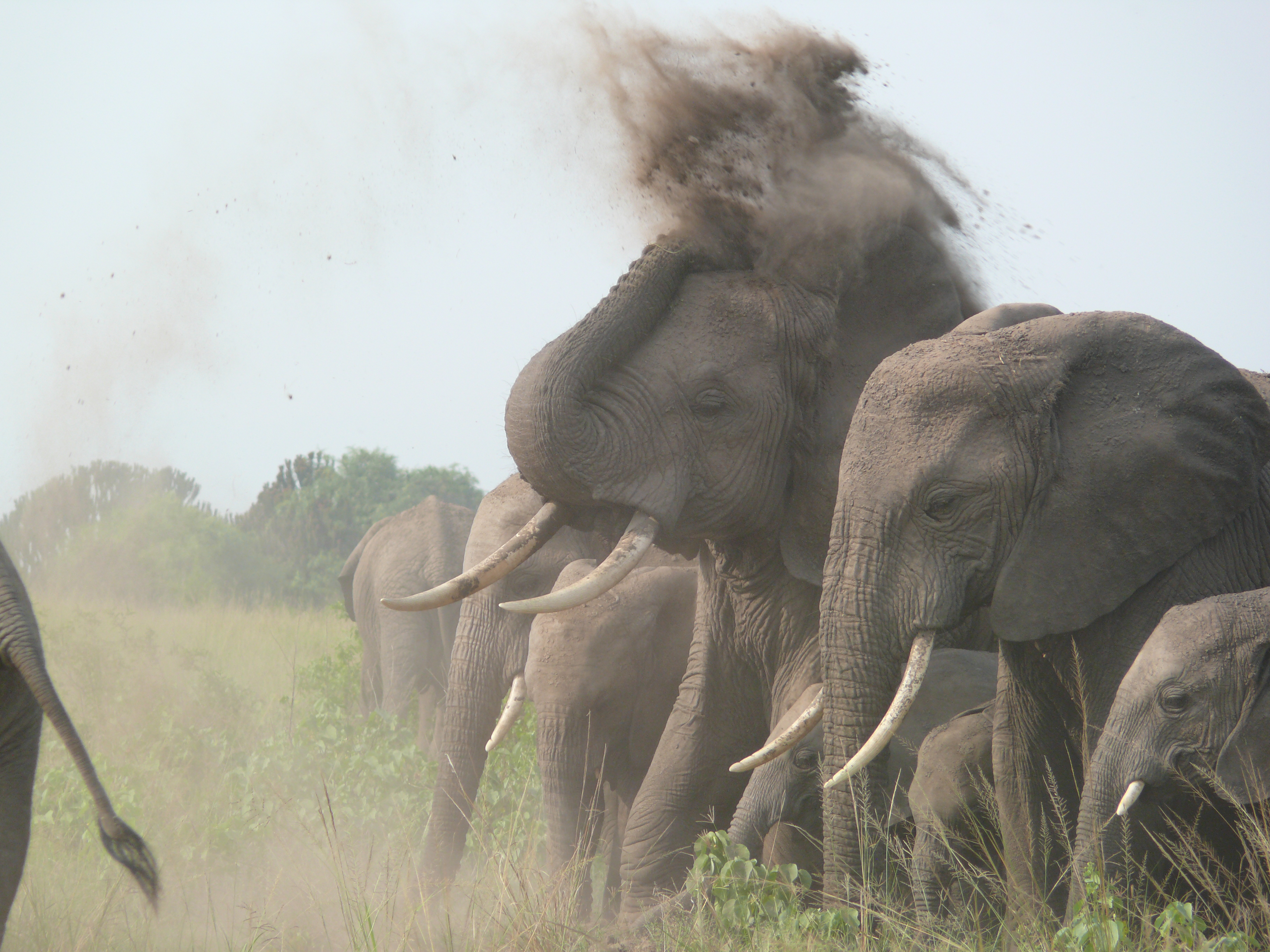
Today we head out on safari on foot with National Park rangers in both the morning and afternoon in search of wildlife. Species commonly seen include elephant, several kinds of antelope Green Vervet monkeys and Red Patas monkeys. Up to 150 migratory bird species may also be seen in the Park, depending on the time of our visit.
Day Eight: Drive to Wa via Navrongo Cathedrale and Dagarti village
This morning after our breakfast, we depart Mole on the long journey to Wa, the capital of the Upper West region. Our journey takes us through the rustic town of Navrongo. In an otherwise mostly Muslim area, Navrongo’s predominantly Christian feel reflects its claim as the home of Catholicism in northern Ghana. We will visit the Cathedral of Our Lady of the Seven Sorrows, a traditionally constructed building notable for its frescos and Gurunsi paintings. Along the way, we will also pass through Dagarti villages on our route where we may be able to make some stops. Today’s long drive will be along some poor roads and so the pace will be slow. The area is hot and dusty but there will be plenty of stops to stretch our legs, with ample chance to meet locals throughout this rural area.
Day Nine: Explore the Wa region, visit Lobi villages and meet a tribal chief
This day will be spent exploring Wa and the surrounding Lobi villages. The Lobi comprise a number of ethnic groups in both Ghana and Burkina Faso whose name translates as Children of the Forest. For years the Lobi had to endure constant attacks from the Guiriko and Kenedougou, as well as the less than sympathetic attentions of the French. Fiercely independent, they still adhere to many of their traditional customs and animist practices, worshipping distinctive wooden fetishes and continuing to uphold their age-old beliefs in the spirit world. Residing in fortified mudbrick compounds in family groups, much like their Dagarti neighbours, the men still carry bows as their ancestors have for generations: the Lobi still have a fearsome reputation as hunters and warriors. This morning we will also visit Nakore Mosque, Sudanic in style, this mosque is important on the Islamic pilgrimage route in Ghana and is a great spot to learn about how Islam is now woven into the more traditional tribal faiths and ways of life. Around lunchtime we’ll return to Wa for some free time before the chance to meet a traditional Wa Chief. These meetings are subject to the Chief’s availability and tribal celebrations but the guide will advise us on the opportunities this afternoon.
Day Ten: Drive to Techiman via old-style Sudanese mosques
A full day’s drive today takes us south through remote areas of Ghana’s far west through the small settlements of Mawule, Banda Nkwanta, and Bole where we will stop to see the beautiful mud and stick mosque. The guide will assist to arrange a picnic lunch and ensure we have multiple stops at points of interest through the journey.
Day Eleven: Drive to Kumasi and afternoon City Tour
On this day, we will drive south to Kumasi, the capital of the Ashanti Kingdom. In the 18th century it was the terminus for the slave trading routes but in the 19th century hostilities between the British colonists and Ashanti culminated in the city being burnt. Now it is Ghana’s second largest city. We will visit the National Cultural Centre and have a guided visit of the Prempeh II Jubilee Museum, It’s here that we will have the chance to see a replica of the Golden Stool, a sacred object to the Ashanti, for the original stool contains the ‘sumsum’ or the spirit of the entire Ashanti kingdom. Stools are an important part of Ghana’s culture and are considered as an extension of an individual both in life and in death. The guide will also take us to see Manhyia Palace, home to the king of the Ashanti Kingdom.
Day Twelve: Drive to Anomabu and relax on the Atlantic coast in the afternoon
Today after breakfast, we will depart Kumasi to travel to Anomabu. The journey will take around four hours but arriving the sandy shores of the Atlantic coast will make the journey worthwhile. We will arrive in time for lunch and the afternoon is free to relax.
Day Thirteen: Visit the slave castles of Ghana’s Gold Coast before a free afternoon or visit Kakum National Park
This morning we will visit both Elmina Castle and Cape Coast Castle around 90 minutes drive along the coast. Along the Ghanaian coastline there are a number of castles built by the colonial powers of the 15th century to protect merchants and their vested interests, and to create safe anchorages for their ships from the ferocity of the Atlantic Ocean. The castles also infamously played an important role in West Africa’s dark slave trade history, used as dungeons for storing slaves before they were shipped abroad. Built on the profits of the then lucrative gold and slave trade, these fortifications became important symbols of European power in the region. With the eventual abolition of the slave trade emphasis changed to the more accepted forms of commerce – coffee, wood and spices. We will return to our hotel in time for lunch. This afternoon there will be an option to visit Kakum National Park, or alternatively to relax in Anomobu.
Day Fourteen: Return to Accra and fly out
Adter breakfast, departing from Anomabu and drive for about three hours back to Kotoka International Airport to connect to your international flight back home.
ENJOY AFRICA