
TOUR CODE: WA – GHA04
Fourteen Days Ghana Birding
Day One: Arrival in Accra
On arrival in Accra, the guide from Afrikan Wildlife Safaris will welcome you and then transfer you to the hotel for dinner and overnight.
Day Two: Shai Hills to Kakum National Park
In the morning we will visit Shai Hills on the Accra Plains. An area of stoic inselbergs (granite outcrops) surrounded by rich wooded grassland, which is home to more than 400 bird species. A significant site for Black-bellied Bustard and Senegal Parrot in particular, Shai Hills boasts an impressive bird list with many wonderful birds like Swallow-tailed Bee-eater, Guinea and Violet Turacos, Viellot’s, Double-toothed and Bearded Barbets, Blue-bellied Roller, Blue-breasted and Woodland Kingfishers, Green Woodhoopoe, Black Scimitar-bill, Mocking Cliff-chat, Splendid Sunbird, and Purple Starling, as well as Stone Partridge, an anomalous African relative of the New World wood quail! But our main target is probably the tricky Chestnut Owlet, a split of Africa Barred Owlet. The afternoon will drive towards southwest Ghana, to one of West Africa’s premier parks, Kakum. We will spend three nights just outside the park.
Days Three to Four: Kakum National Park
The park is recognized as an Important Bird Area, with over 360 species recorded near the walkway, but is crucial for butterflies and mammals too. An astounding 10 species of hornbill have been recorded from the walkway, including several seldom-seen in Africa, like White-crested, Brown-cheeked, Black Dwarf, and Yellow-casqued Hornbills. The diversity of birds is extremely impressive, with 10 species of kingfishers also featuring, including Chocolate-backed and Giant Kingfishers. A remarkable 11 barbets occur there also, including specialties like Bristle-nosed, Hairy-breasted and Naked-faced Barbets, and Red-rumped Tinkerbird. Other birds we will be on the lookout for in Kakum will be other West African specialties like Yellow-billed Turaco, Fire-bellied and Melancholy Woodpeckers, Red-vented and Blue-billed Malimbe, Violet-backed Hyliota, Sharpe’s Apalis, and Johanna’s Sunbird. Our time will not only be spent on the walkway though, as we seek birds at ground level, walking forest trails that may lead us to a ton of greenbuls, Rufous-sided Broadbill or Fire-crested Alethe to add to the intoxicating mix of canopy birds on site.
Day Five: Kakum to Ankasa National Park
This morning, we will continue west to a very special site indeed, Ankasa, right on the border with Ivory Coast. This treasured area has only opened up relatively recently and so is not as well developed for tourists as Kakum, but there is a great new naturalist hotel that we can use. This enables us access to the best pristine primary lowland rainforest in Ghana, famed for holding rare and local species like Nkulengu Rail, White-bellied Kingfisher, White-crested Tiger-Heron, Hartlaub’s Duck, Spot-breasted Ibis and Akun Eagle-Owl. We will spend two nights near this exceptional forest reserve.
Day Six: Ankasa National Park
A full day will be spent in Ankasa seeking some of the many rare and local species occurring there. Look out for Red-thighed Sparrowhawk, Shining-blue Kingfisher, Black and Blue-moustached Bee-eaters, Red-fronted Parrot, Red-chested Owlet, Rufous-winged Illadopsis, Red-headed Malimbe, Western Bluebill, White-browed Forest-Flycatcher, White-tailed Alethe, Red-fronted Antpecker, and Carmelite Sunbird. A second night will be spent in the rainforest, we can search for night birds like Fraser’s Eagle-owl and Long-tailed Nightjar.
Day Seven: Ankasa to Kakum National Park
After much of the day in Ankasa we return to Kakum for another night, visiting a different sector of the park.
Day Eight: Kakum, then visit the “picathartes site”, and drive to Kumasi
We will be birding the more open Aboabo section of northern Kakum National Park during the morning. This offers easy roadside birding with a shot at some special birds in the process, most notably Long-tailed Hawk, the odd nutchatch-like Preuss’s Weaver, and Black-capped Apalis a specialist of this forest biome. Other exciting possibilities include Red-billed Helmet shrike, Blue Cuckoo shrike and the scarce and handsome Yellow-throated Cuckoo. In the afternoon, we will make the pilgrimage to a very special piece of rainforest that hosts vine tangled caves, where the Yellow-headed Picathartes, one of the strangest of Earth’s bird families, dwells. The visit is strategically timed in the late afternoon, when the “rockfowl” usually return to their caves to roost, after a day of foraging within the forest. This bird alone draws birders to Ghana from across the globe, as it is the most reliable site in the world to find this species and indeed African endemic family. At the end of this day, we drive to the city of Kumasi for the night.
Day Nine: Bobiri Butterfly Sanctuary to Mole National Park
In the morning we will visit the butterfly reserve of Bobiri, seeking forest species like Red-billed Dwarf-Hornbill, a tiny woodpecker in the form of African Piculet, and one of Africa’s smallest birds in the form of Tit-Hylia, as well as other species like Narina’s Trogon, Afep and Bronze-naped Pigeons, African Emerald Cuckoo, Forest and White-headed Wood hoopoes, Sabine’s Puffback, Red-headed and Crested Malimbes and Finschs’s Flycatcher-Thrush. By the afternoon, we will drive north passing into dryer Upper Guinea Savanna, with its markedly different birds. We will spend three nights at a hotel inside Mole National Park.
Days Ten and Eleven: Mole National Park
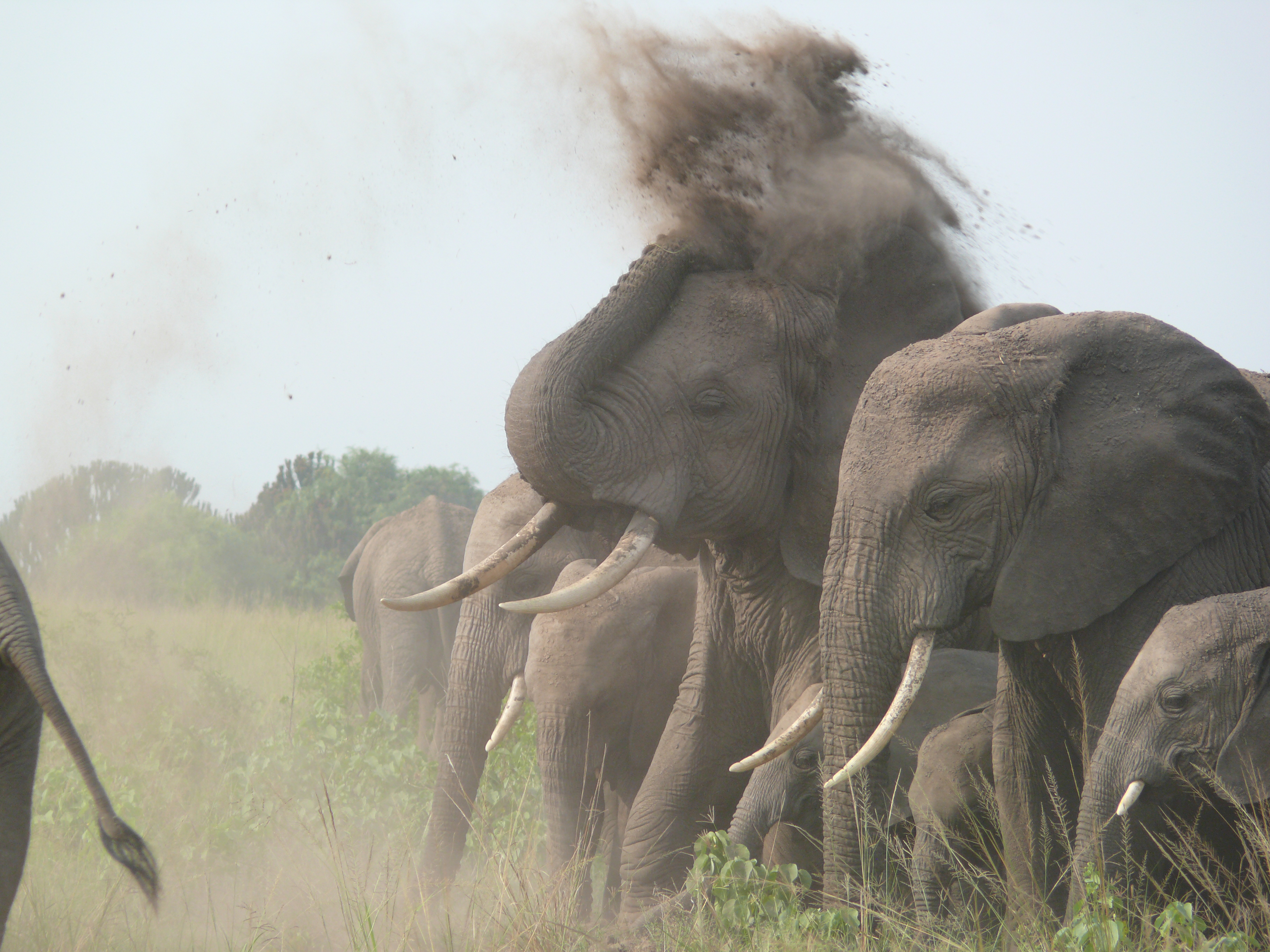
This large (4,800 km2) national park protects predominantly open Guinea savanna woodland, which is interspersed with grasslands, swamps, and escarpments. There are two ephemeral rivers in the park, the Lovi and Mole, which dry out during the dry season and act as waterhole magnets for mammals and songbirds like finches. Mole is home to more than 330 bird species (90% of Ghana’s savanna avifauna!) and over 90 mammals. Based at the park’s main hotel, beautifully perched on an escarpment over-looking panoramic waterholes and savanna woodland below, there’s always a chance of an exciting find. We will watch the waterholes, for the likes of elephants, Waterbuck, Kob and Bushbuck, and a slew of waterbirds, like Hamerkop, Woolly-necked and Saddle-billed Storks, Black-headed Heron and Hadada Ibis. Closer inspection may reveal flocks of radiant finches, like Lavender and Orange-cheeked Waxbills, fire finches (six species occur in the park), and Red-winged Pytillias. The skies are not to be ignored as there are an incredible 30 raptor species, including Palm-nut and White-backed Vultures, African Cuckoo-hawk, Bateleur and Red-necked Buzzard, six bee-eaters (including Red-throated and Northern Carmine Bee-eaters), seven hornbills (including Abyssinian Ground-Hornbill and Northern Red-billed Hornbill), five rollers (including Abyssinian, Broad-billed and Rufous-crowned Rollers), and ten kingfishers (including Blue-breasted and Gray-headed Kingfishers). Other notable species include Violet Turaco, Bearded Barbet, Yellow-billed Shrike, Senegal Eremomela, the gorgeous black-and-yellow Oriole Warbler, Purple Starling, White-crowned Robin-Chat, Splendid Sunbird, Chestnut-crowned Sparrow-Weaver, and Sahel Bush-Sparrow. Night Birding is often productive with some amazing marquee nightbirds, including Grayish Eagle-Owl, African Scops-Owl, Northern White-faced Scops-Owl, and the stunning Standard-winged and Long-tailed Nightjars all possible. Two nights will also be spent inside the park, on the scenic escarpment.
Day Twelve: Mole to Bolgatanga
We will drive farther north, moving into the Upper East Region of northern Ghana, close to the border with Burkina Faso. The habitat noticeably becomes drier, hillier and rockier. In the afternoon we visit Tongo Hills, an area of granite outcroppings, where we seek Fox Kestrel, Rock-loving Cisticola, Mocking Cliff-chat and Brown-rumped Bunting. Other birds include Gabar and Dark-chanting Goshawks, Piapiac, Pygmy and Scarlet-chested Sunbirds, and Orange-cheeked and Black-rumped Waxbills. Two nights will be spent in Bolgatanga, a town that lies within the Red Volta River Valley, historically a major migration route for elephants, and a great strategic position to pursue another key West African bird family the following day…
Day Thirteen: Tono Dam
Today we bird the Burkina Faso border, starting out at Tono Dam, where water birds mix with songbirds visiting the wetland’ edge. Targets include Spur-winged Goose, Forbes’s Plover, Senegal and Spotted Thick-knees, Four-banded Sandgrouse, Namaqua Dove, Great Spotted Cuckoo, Yellow Penduline-Tit, Long-tailed Glossy, Chestnut-bellied, Lesser Blue-eared, Greater Blue-eared and Bronze-tailed Starlings, African Silverbill, Cut-throat, Zebra Waxbill and Gosling’s Bunting. At this time we may also encounter some migratory Western Palearctic warblers too. In the afternoon we shift focus to a river where another spectacular African-endemic family can be found, the striking black-white- and-grey Egyptian Plover or Crocodile Bird. Patrolling the river banks, if it takes flight we will be exposed to one of the neatest wing patterns in the avian world. We return to Bolgatanga for a second night.
Day Fourteen: Tamale to Accra and fly out
After some final birding within the dry country of Northern Ghana, we retreat south, to the city of Tamale to connect with a domestic flight to the Ghanaian capital, Accra. This will be taken in the afternoon in order to arrive in time for international departures from Accra this evening.
ENJOY AFRICA